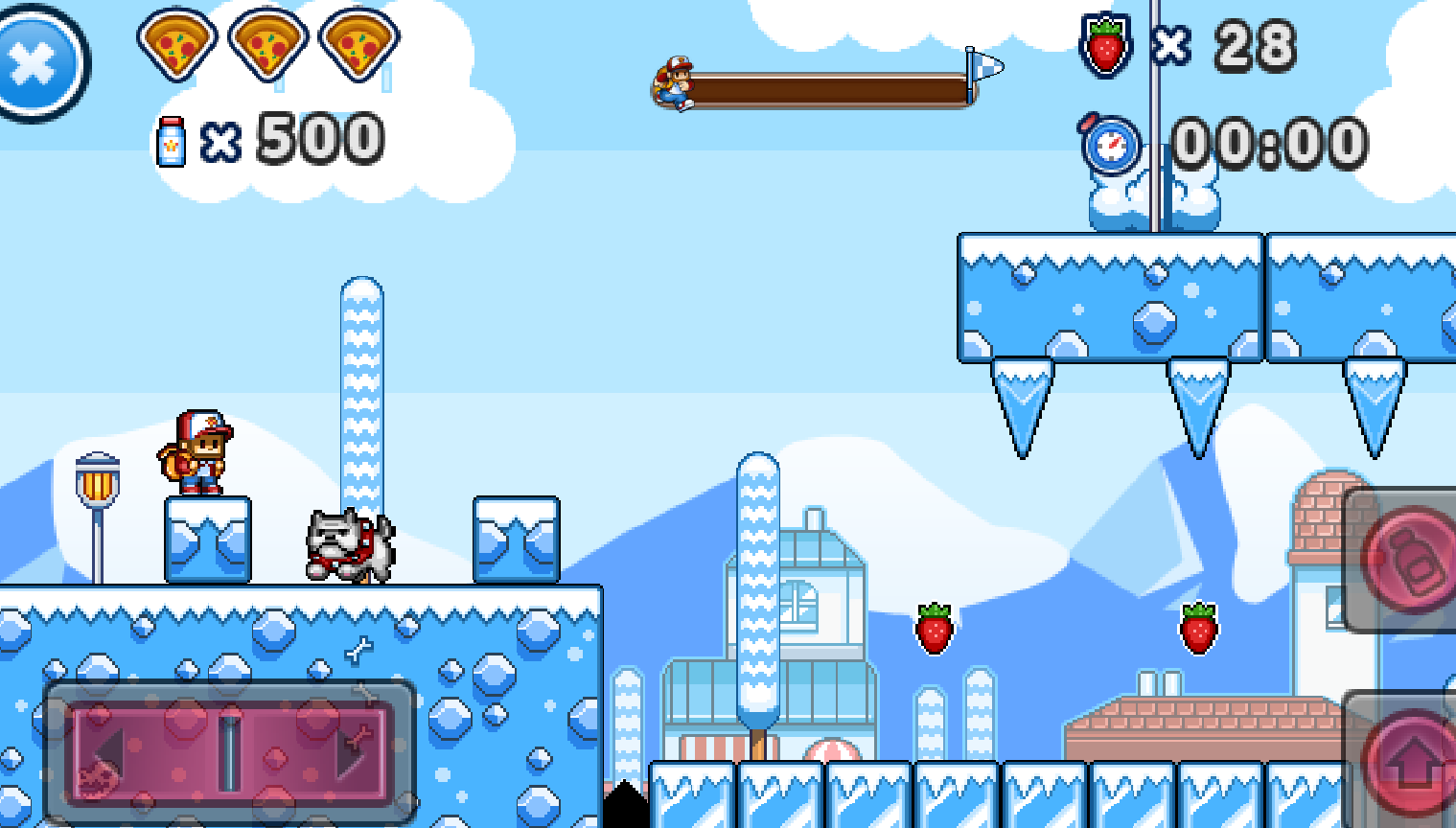
Interviewer: Let's start with the beginning of your journey. What made you step into the WeChat mini-game market six years ago? Developer: It was August six years ago, and the WeChat mini-game craze was sweeping across the market. I was full of dreams and hoped to carve out a niche for myself in this booming sector. At that time, I worked until 3 a.m. every day, and after a month of intense efforts in my spare time, I independently developed the side-scrolling platformer game Pizza Little Prince 2.
Interviewer: How was the response after the game was launched? Did it meet your expectations? Developer: Beyond my expectations. After launching, I shared the game in several game developer groups, and surprisingly, I received cooperation invitations from some publishers. The performance was outstanding— the first-month revenue reached 200,000 to 300,000 yuan, and it kept growing. Taking this opportunity, I made a decisive decision to resign and set up a small team of five in September 2019, focusing on mini-game development. We even successfully secured angel investment shortly after.
Interviewer: It sounds like a great start. But I guess the journey wasn't always smooth. What challenges did you face afterward?
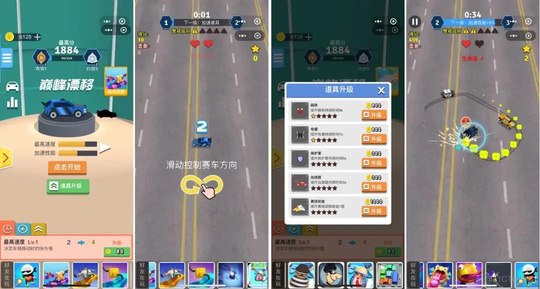
Developer: Unfortunately, the good times didn't last long. Several subsequent games flopped one after another. Amid the impact of the pandemic, I experienced the harshness of the market. By chance, I learned about the release of Cocos3D 1.0, and an idea of opportunity popped into my mind. So I launched two 3D projects and developed two racing games,
Peak Drift and
Daily Racing 3D. Regrettably, the user acquisition effect was still not satisfactory.
Interviewer: Later, you developed Help Her Escape, which seemed to turn things around. How did that idea come about? Developer: About a month after the 3D games didn't work out, I came across an ad for Gardenscapes on Douyin— the ad was for Help Her Escape, a puzzle game where you pull out pins to clear levels. That gameplay instantly caught my eye. Actually, I had a similar idea before, but I didn't put it into practice immediately. Later, when a publisher showed me the data of related keywords, I made up my mind to develop this game. We worked at lightning speed and completed the development in 14 days. The data performance was amazing— the next-day retention rate reached over 35%. The peak daily active users once hit 2 million, and the daily revenue stabilized at 70,000 to 80,000 yuan. It felt like everything was back on track.
Interviewer: After that, you launched several games that were similar to those on the App Store charts. Why did you choose that direction, and how did it go? Developer: In the following year or so, we launched several mini-games that were already on the App Store charts— you could say we copied them [laughs]. Games like Hunter Assassin, Parking Lot, Flappy Bird, and so on. Despite the high degree of reproduction, these projects never took off. We adjusted the data many times, but there was still no obvious effect. Many projects were aborted at this stage, and I still have three or four unfinished abandoned projects on my computer.
Interviewer: How did the company survive during that period? And later you decided to transform into mid-core mini-games. What led to that decision, and what challenges did you encounter? Developer: During that year, we mainly relied on the previous revenues from Pizza Little Prince 2 and Help Her Escape to keep the company running. As the mini-game market gradually declined at the end of the year, we decided to transform and move towards mid-core mini-game development. However, this transformation brought fatal challenges: the increase in labor costs expanded the team to ten people, and various technical difficulties emerged one after another. In the end, among the three mid-core games we launched, one (Brave Expedition) had dismal data after launch, and the other two— an ARPG doomsday wasteland game and a doomsday-themed card game— were stillborn due to a broken capital chain.
Interviewer: Many people are curious why
Pizza Little Prince 2, your first game, is being released now. Could you explain that?
Developer: There are two main reasons. First, this is my first work, a labor of love that I can't bear to let go of. More importantly, I deeply understand the value of this experience. Although it didn't achieve the expected results, it carries my efforts and dreams. Releasing it now is also a way to bid farewell to that period of time.
Interviewer: Looking back at your journey and the current mini-game market, what are your thoughts? Developer: The mini-game market is no longer as prosperous as it used to be. Lightweight games now require abundant creativity and precise marketing, while mid-core games demand higher quality and depth. New platforms may bring some growth opportunities— that's my personal thought.
Interviewer: Is there anything else you want to share with the industry or potential partners?
Developer: Well, if there are good opportunities in the future, feel free to cooperate with me. Our studio is Mimen Games.
Demo(The game can only run on mobile devices and is available only in the Chinese version):
pizzaboy